
Description
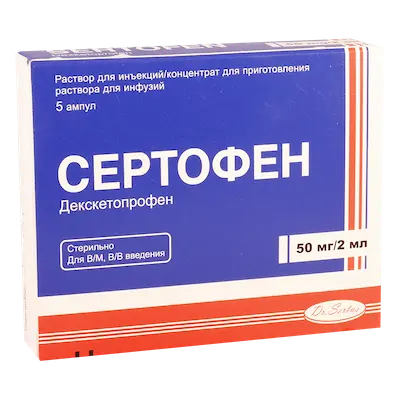
Sertofen (dexketoprofen) 50 mg/2 ml.
Sertofen is a medication that contains dexketoprofen as its active ingredient. It is available in the form of ampoules, with each ampoule containing 50 mg. of dexketoprofen in 2 ml. of solution. Sertofen is commonly prescribed for its analgesic and anti-inflammatory properties, making it a popular choice for the treatment of pain and inflammation.
Indications
Sertofen is indicated for the relief of mild to moderate pain, such as headache, dental pain, menstrual pain, muscle pain, and joint pain. It is also used to reduce inflammation associated with conditions like arthritis and sports injuries.
Mechanism of Action
Dexketoprofen, the active ingredient in Sertofen, belongs to a class of medications known as nonsteroidal anti-inflammatory drugs (NSAIDs). It works by inhibiting the enzyme cyclooxygenase (COX), which is involved in the production of prostaglandins. Prostaglandins are substances in the body that contribute to pain, inflammation, and fever. By blocking the production of prostaglandins, dexketoprofen helps reduce pain and inflammation.
Dosage and Administration
Sertofen is typically administered by intramuscular or intravenous injection. The usual dose for adults is 50 mg. (1 ampoule) every 8 hours as needed for pain relief. The maximum daily dose should not exceed 150 mg. The dose may be adjusted based on the severity of pain and the individual’s response to the medication.
Side Effects
Like all medications, Sertofen can cause side effects. Common side effects may include nausea, stomach pain, indigestion, headache, dizziness, and rash. More serious side effects such as gastrointestinal bleeding, kidney problems, and allergic reactions are rare but possible. It is important to seek medical attention if you experience any severe or persistent side effects while taking Sertofen.
Contraindications
Sertofen is contraindicated in patients with a history of hypersensitivity to dexketoprofen or other NSAIDs. It should not be used in patients with a history of asthma, urticaria, or allergic-type reactions after taking aspirin or other NSAIDs. Sertofen is also contraindicated in patients with active peptic ulcers, severe heart failure, and severe liver or kidney impairment.
Drug Interactions
Sertofen may interact with other medications, including anticoagulants, antiplatelet drugs, diuretics, and certain other NSAIDs. These interactions can increase the risk of side effects or reduce the effectiveness of one or both medications. It is important to inform your healthcare provider about all the medications you are taking, including prescription drugs, over-the-counter medicines, and herbal supplements, before starting Sertofen.
Precautions
Before using Sertofen, inform your healthcare provider if you have a history of gastrointestinal disorders, cardiovascular disease, high blood pressure, kidney or liver problems, asthma, or allergies. Use caution when driving or operating machinery while taking Sertofen, as it may cause dizziness or drowsiness. Avoid alcohol consumption while taking Sertofen, as it can increase the risk of stomach irritation and other side effects.
Storage
Store Sertofen at room temperature, away from moisture and heat. Keep the medication out of reach of children and pets. Do not use Sertofen after the expiration date printed on the packaging. Properly dispose of any unused or expired medication according to local regulations.
Conclusion
Sertofen is a medication containing dexketoprofen that is commonly used for the relief of pain and inflammation. It works by inhibiting the production of prostaglandins, which are involved in the sensation of pain and the inflammatory response. While Sertofen can be effective in managing various types of pain, it is important to use it as directed by your healthcare provider and to be aware of potential side effects and drug interactions. If you have any questions or concerns about Sertofen or its use, consult your healthcare provider for more information.