Description
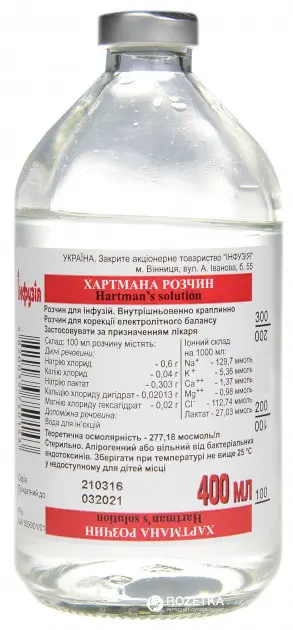
Hartmann’s Solution (Sodium Chloride) 400 ml.
Hartmann’s Solution, also known as Ringer’s lactate or sodium lactate solution, is a sterile solution used for intravenous administration to treat dehydration, electrolyte imbalances, and fluid loss. It is composed of water, sodium chloride, potassium chloride, calcium chloride, and sodium lactate in specific concentrations to mimic the electrolyte composition of human plasma.
Composition:
- Sodium chloride
- Potassium chloride
- Calcium chloride
- Sodium lactate
Indications:
Hartmann’s Solution is commonly used for the following conditions:
- Dehydration
- Electrolyte imbalances
- Fluid loss due to vomiting or diarrhea
- Post-operative fluid replacement
- Shock
Mechanism of Action:
When administered intravenously, Hartmann’s Solution helps restore and maintain electrolyte balance in the body. The sodium chloride in the solution helps maintain the body’s fluid balance, while potassium chloride and calcium chloride help regulate muscle function, nerve transmission, and heart rhythm. Sodium lactate is converted to bicarbonate in the liver, helping to buffer acids in the body and maintain pH balance.
Administration:
Hartmann’s Solution is typically administered as an intravenous infusion. The rate of administration and volume of solution required will depend on the patient’s condition and fluid needs. It is important to monitor the patient’s electrolyte levels, fluid status, and vital signs during administration.
Contraindications:
Do not use Hartmann’s Solution in patients with known hypersensitivity to any of the components in the solution. It should also be used with caution in patients with certain medical conditions, such as heart failure, kidney disease, or high blood pressure.
Adverse Effects:
Some common adverse effects of Hartmann’s Solution may include:
- Fluid overload
- Electrolyte imbalances
- Allergic reactions
- Infection at the infusion site
Precautions:
Before administering Hartmann’s Solution, healthcare providers should assess the patient’s fluid status, electrolyte levels, and medical history to determine the appropriate dose and rate of administration. Close monitoring is essential during infusion to prevent complications.
Storage:
Hartmann’s Solution should be stored at room temperature away from light and moisture. Do not freeze the solution, and check for any signs of contamination or discoloration before use.
Conclusion:
Hartmann’s Solution is a vital intravenous fluid used to treat dehydration, electrolyte imbalances, and fluid loss in various clinical settings. Understanding its composition, indications, mechanism of action, administration, contraindications, adverse effects, precautions, and storage requirements is essential for safe and effective use in patient care.